Be yourself; Everyone else is already taken.
— Oscar Wilde.
This is the first post on my new blog. I’m just getting this new blog going, so stay tuned for more. Subscribe below to get notified when I post new updates.
Be yourself; Everyone else is already taken.
— Oscar Wilde.
This is the first post on my new blog. I’m just getting this new blog going, so stay tuned for more. Subscribe below to get notified when I post new updates.
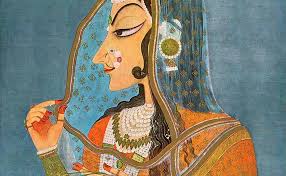
If art and paintings fascinates you just like it fascinates me then this blog is for you.
The other day our history professor Dr. Archana took us for a field trip to the Chhatrapati Shivaji Maharaj Vastu Sangrahalaya. Regardless not being a very museum person, this is one of the most interesting museums I had ever been to. There were many sections to name few, Sculpture galler, Pre and Proto History gallery, Natural History Section, Indian Miniature Painting gallery, Krishna gallery, Decorative Metalware gallery, House of Laxmi- Coin gallery, Karl and Meherbai Khandalavala gallery, Chinese and Japanese Art gallery and many more.
Out of so many galleries my favorite gallery was Indian Miniature Painting gallery. Miniature paintings are colorful handmade paintings very small in size. One of the outstanding features of these paintings is the intricate brushwork which contributes to their unique identity. The colors used in the paintings are derived from various natural sources like vegetables, indigo, precious stones, gold and silver. The most common theme used in the miniature paintings of India comprises of the Ragas or a pattern of musical notes, and religious and mythological stories. The earliest Miniature paintings in India can be traced back to the 7th century AD, when they flourished under the patronage of the Palas of Bengal. There are many schools and styles of miniature painting like Mughal school, Rajasthani school, Bikaner School, Pahari School, Deccani School etc.

More closely we look at these paintings they become more fascinating. Each of the painting has its own story and emotions behind them.
Mughal Style, during the reign of the Mughal Emperor Akhbar miniature painting developed into a style of popularly known as Mughal Paintings. He found as atelier of over 100 artists who worked under two great Persian masters, Mir Sayyad Ali, Abd-al-samad and later under Farroukh Beg. The Mughal style introduced realism to some extent. These paintings were known for their masterly composition, aerial perspective, kaleidoscope and transparent coloring and detailed description of nature.
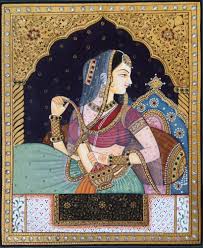
Another very famous school is Rajasthani School or style of painting. Rahasthani style displays the synthesis of the western Indian, sultanate and popular Mughal style, developed in many centers in 16th-17th centuries. Some of the important centers were Mewar, Bundi-Kota, Kishangarh, Bikaner, Mewar and Jaipur-amber in Rajasthan; Malwa, Ratlam, Bundelkhand in central India. The paintings in each of these centers had its own peculiarities and regional characteristics; they are typically Indian in spirit and form. The Rajput rulers had their own ateliers of painters, just like Mughal rulers. Paintings represented royal lifestyle of kings and queen as well as Krishana, the divine cowherd.
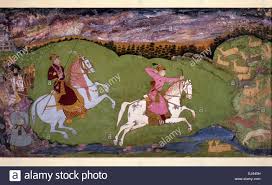
Deccan style is another important school of miniature art of Indian paintings. Deccani Painting is a product of small rteliers of provential governments who formed independent sultanates of Bijapur, Ahmadnagar, Golkonda etc in 16th century. It was first developed under Persian and Vijyanagar. The greatest patron of Bijapur style was Ibrahim Adil Shah II. This style was known for the use of warm color tones on monochrome background and draughtsmanship.
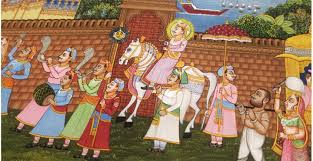
talikng about marwar style, Marwae is the land of endearing legends and tradition, situated in the western part of Rajasthan. the artist of Marwar mainly delighted in the art of portraiture and used bright colours to portray the dignitaries in their tall pagaries, impressive costumes and gorgeous darbar scenes.
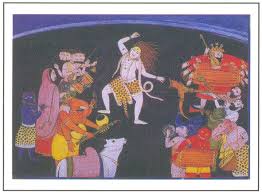
Pahari School of Miniature Painting is one of the most popular school of painting of that time. the close of the seventeenth century, painting developed in the Punjab Hill states, which for long had remained in cultural backwaters. The rulers of the Punjab hill states were chieftains like the Rajasthani rulers. Though some of the artists from the Mughal atelier did come to Pahari courts and executed a few commissioned works they were not the pure Pahari miniature painters. The lively and romantic school of Pahari miniaturists produced some of the finest religious or legendary scenes offering a glimpse of Indian life with sentimental and psychological undertones.
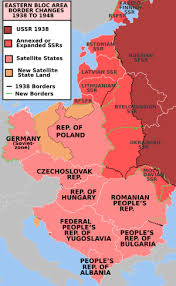
Going back to the time and reading about the Soviet Union during World War 2 is very interesting. The Soviet Union, officially known as the Union of Soviet Socialist Republics (USSR or СССР), was a federal sovereign state in northern Eurasia that existed from 1922 to 1991. But going back to the world war I Joseph Stalin was the dictator of the Union of Soviet Socialist Republics (USSR). Under him, Soviet Union was transformed from a peasant society into an industrial and military superpower. However, he ruled by terror, and millions of his own citizens died during his brutal reign.
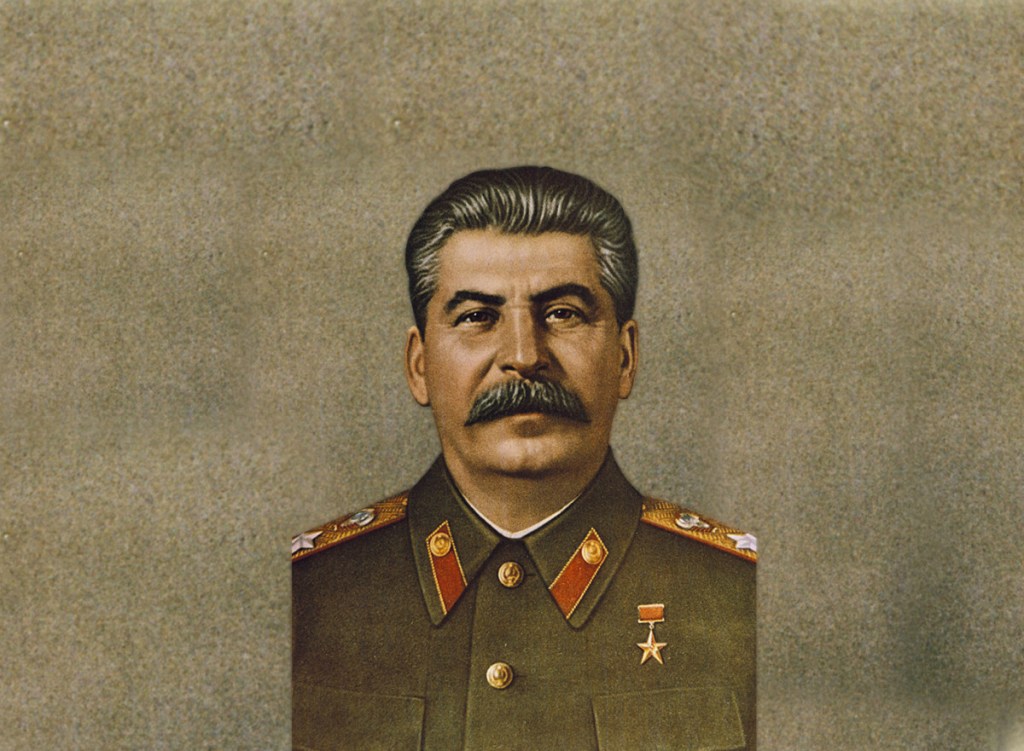
Stalin aligned with the United States and Britain in World War II (1939-1945) but afterward engaged in an increasingly tense relationship with the West known as the Cold War (1946-1991). After his death, the Soviets started a de-stalinization process.
Starting in the late 1920’s, Joseph Stalin launched a series of five-year plans intended to transform the Soviet Union from a peasant society into an industrial superpower. His development plan was centered on government control of the economy and included the forced collectivization of Soviet agriculture, in which the government took control of farms. Millions of farmers refused to cooperate with Stalin’s orders and were shot or exiled as punishment. The forced collectivization also led to widespread famine across the Soviet Union that killed millions.
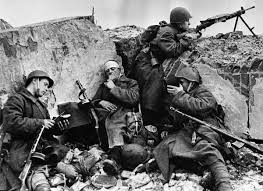
Stalin ruled by terror in order to eliminate anyone who might oppose him. He expanded the powers of the secret police, encouraged citizens to spy on one another and had millions of people killed or sent to the Gulag system of forced labor camps.
Cities were renamed in his honor. Soviet history books were rewritten to give him a more prominent role in the revolution and mythologize other aspects of his life. He was the subject of flattering artwork, literature and music, and his name became part of the Soviet national anthem. He censored photographs in an attempt to rewrite history, removing former associates executed during his many purges. His government also controlled the Soviet media.
In 1939, on the eve of World War II, Joseph Stalin and German dictator Adolf Hitler (1889-1945) signed the German-Soviet Nonaggression Pact. Stalin then proceeded to annex parts of Poland and Romania. He also launched an invasion of Finland. Then, in June 1941, Germany broke the Nazi-Soviet pact and invaded the USSR, making significant early inroads.
As German troops approached the Soviet capital of Moscow, Stalin remained there and directed a scorched earth defensive policy, destroying any supplies or infrastructure that might benefit the enemy. The tide turned for the Soviets with the Battle of Stalingrad from August 1942 to February 1943, during which the Red Army defeated the Germans and eventually drove them from Russia.
As the war progressed, Stalin participated in the major Allied conferences, is iron will and deft political skills enabled him to play the loyal ally while never abandoning his vision of an expanded postwar Soviet empire.
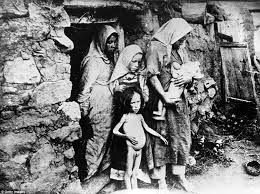
Joseph Stalin did not mellow with age: He prosecuted a reign of terror, purges, executions, exiles to labor camps and persecution in the postwar USSR, suppressing all dissent and anything that smacked of foreign–especially Western–influence. He established communist governments throughout Eastern Europe, and in 1949 led the Soviets into the nuclear age by exploding an atomic bomb.
This is an example post, originally published as part of Blogging University. Enroll in one of our ten programs, and start your blog right.
You’re going to publish a post today. Don’t worry about how your blog looks. Don’t worry if you haven’t given it a name yet, or you’re feeling overwhelmed. Just click the “New Post” button, and tell us why you’re here.
Why do this?
The post can be short or long, a personal intro to your life or a bloggy mission statement, a manifesto for the future or a simple outline of your the types of things you hope to publish.
To help you get started, here are a few questions:
You’re not locked into any of this; one of the wonderful things about blogs is how they constantly evolve as we learn, grow, and interact with one another — but it’s good to know where and why you started, and articulating your goals may just give you a few other post ideas.
Can’t think how to get started? Just write the first thing that pops into your head. Anne Lamott, author of a book on writing we love, says that you need to give yourself permission to write a “crappy first draft”. Anne makes a great point — just start writing, and worry about editing it later.
When you’re ready to publish, give your post three to five tags that describe your blog’s focus — writing, photography, fiction, parenting, food, cars, movies, sports, whatever. These tags will help others who care about your topics find you in the Reader. Make sure one of the tags is “zerotohero,” so other new bloggers can find you, too.

 SOVIET UNION