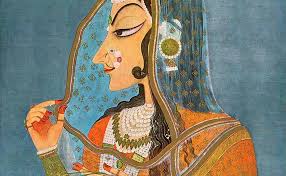
If art and paintings fascinates you just like it fascinates me then this blog is for you.
The other day our history professor Dr. Archana took us for a field trip to the Chhatrapati Shivaji Maharaj Vastu Sangrahalaya. Regardless not being a very museum person, this is one of the most interesting museums I had ever been to. There were many sections to name few, Sculpture galler, Pre and Proto History gallery, Natural History Section, Indian Miniature Painting gallery, Krishna gallery, Decorative Metalware gallery, House of Laxmi- Coin gallery, Karl and Meherbai Khandalavala gallery, Chinese and Japanese Art gallery and many more.
Out of so many galleries my favorite gallery was Indian Miniature Painting gallery. Miniature paintings are colorful handmade paintings very small in size. One of the outstanding features of these paintings is the intricate brushwork which contributes to their unique identity. The colors used in the paintings are derived from various natural sources like vegetables, indigo, precious stones, gold and silver. The most common theme used in the miniature paintings of India comprises of the Ragas or a pattern of musical notes, and religious and mythological stories. The earliest Miniature paintings in India can be traced back to the 7th century AD, when they flourished under the patronage of the Palas of Bengal. There are many schools and styles of miniature painting like Mughal school, Rajasthani school, Bikaner School, Pahari School, Deccani School etc.

More closely we look at these paintings they become more fascinating. Each of the painting has its own story and emotions behind them.
Mughal Style, during the reign of the Mughal Emperor Akhbar miniature painting developed into a style of popularly known as Mughal Paintings. He found as atelier of over 100 artists who worked under two great Persian masters, Mir Sayyad Ali, Abd-al-samad and later under Farroukh Beg. The Mughal style introduced realism to some extent. These paintings were known for their masterly composition, aerial perspective, kaleidoscope and transparent coloring and detailed description of nature.
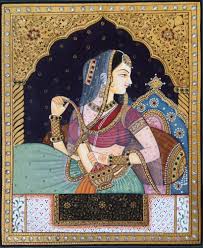
Another very famous school is Rajasthani School or style of painting. Rahasthani style displays the synthesis of the western Indian, sultanate and popular Mughal style, developed in many centers in 16th-17th centuries. Some of the important centers were Mewar, Bundi-Kota, Kishangarh, Bikaner, Mewar and Jaipur-amber in Rajasthan; Malwa, Ratlam, Bundelkhand in central India. The paintings in each of these centers had its own peculiarities and regional characteristics; they are typically Indian in spirit and form. The Rajput rulers had their own ateliers of painters, just like Mughal rulers. Paintings represented royal lifestyle of kings and queen as well as Krishana, the divine cowherd.
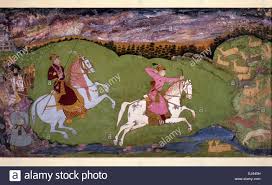
Deccan style is another important school of miniature art of Indian paintings. Deccani Painting is a product of small rteliers of provential governments who formed independent sultanates of Bijapur, Ahmadnagar, Golkonda etc in 16th century. It was first developed under Persian and Vijyanagar. The greatest patron of Bijapur style was Ibrahim Adil Shah II. This style was known for the use of warm color tones on monochrome background and draughtsmanship.
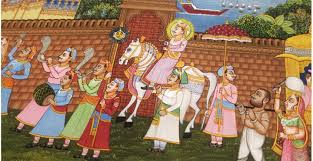
talikng about marwar style, Marwae is the land of endearing legends and tradition, situated in the western part of Rajasthan. the artist of Marwar mainly delighted in the art of portraiture and used bright colours to portray the dignitaries in their tall pagaries, impressive costumes and gorgeous darbar scenes.
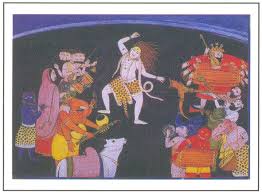
Pahari School of Miniature Painting is one of the most popular school of painting of that time. the close of the seventeenth century, painting developed in the Punjab Hill states, which for long had remained in cultural backwaters. The rulers of the Punjab hill states were chieftains like the Rajasthani rulers. Though some of the artists from the Mughal atelier did come to Pahari courts and executed a few commissioned works they were not the pure Pahari miniature painters. The lively and romantic school of Pahari miniaturists produced some of the finest religious or legendary scenes offering a glimpse of Indian life with sentimental and psychological undertones.
 SOVIET UNION