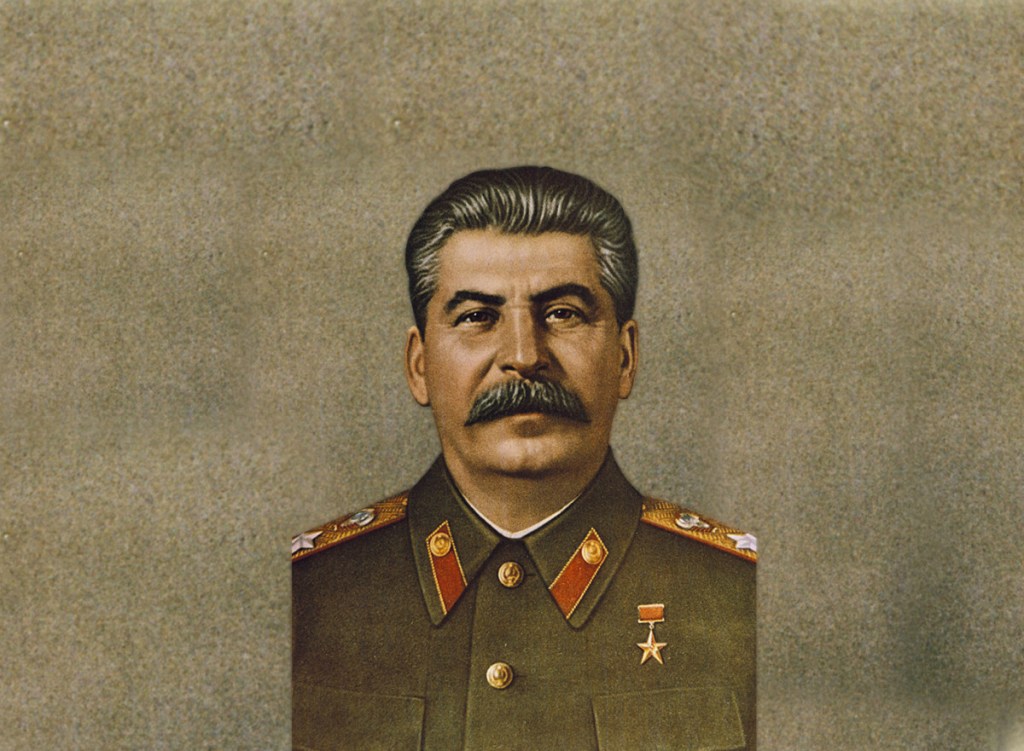
Going back to the time and reading about the Soviet Union during World War 2 is very interesting. The Soviet Union, officially known as the Union of Soviet Socialist Republics (USSR or СССР), was a federal sovereign state in northern Eurasia that existed from 1922 to 1991. But going back to the world war I Joseph Stalin was the dictator of the Union of Soviet Socialist Republics (USSR). Under him, Soviet Union was transformed from a peasant society into an industrial and military superpower. However, he ruled by terror, and millions of his own citizens died during his brutal reign.
Stalin aligned with the United States and Britain in World War II (1939-1945) but afterward engaged in an increasingly tense relationship with the West known as the Cold War (1946-1991). After his death, the Soviets started a de-stalinization process.
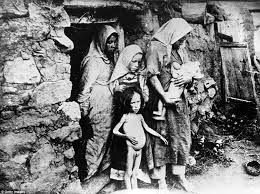
Starting in the late 1920’s, Joseph Stalin launched a series of five-year plans intended to transform the Soviet Union from a peasant society into an industrial superpower. His development plan was centered on government control of the economy and included the forced collectivization of Soviet agriculture, in which the government took control of farms. Millions of farmers refused to cooperate with Stalin’s orders and were shot or exiled as punishment. The forced collectivization also led to widespread famine across the Soviet Union that killed millions.
Stalin ruled by terror in order to eliminate anyone who might oppose him. He expanded the powers of the secret police, encouraged citizens to spy on one another and had millions of people killed or sent to the Gulag system of forced labor camps.
Cities were renamed in his honor. Soviet history books were rewritten to give him a more prominent role in the revolution and mythologize other aspects of his life. He was the subject of flattering artwork, literature and music, and his name became part of the Soviet national anthem. He censored photographs in an attempt to rewrite history, removing former associates executed during his many purges. His government also controlled the Soviet media.
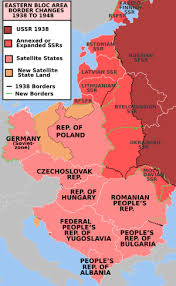
In 1939, on the eve of World War II, Joseph Stalin and German dictator Adolf Hitler (1889-1945) signed the German-Soviet Nonaggression Pact. Stalin then proceeded to annex parts of Poland and Romania. He also launched an invasion of Finland. Then, in June 1941, Germany broke the Nazi-Soviet pact and invaded the USSR, making significant early inroads.
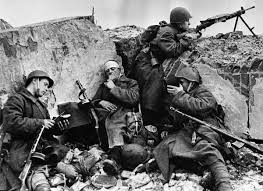
As German troops approached the Soviet capital of Moscow, Stalin remained there and directed a scorched earth defensive policy, destroying any supplies or infrastructure that might benefit the enemy. The tide turned for the Soviets with the Battle of Stalingrad from August 1942 to February 1943, during which the Red Army defeated the Germans and eventually drove them from Russia.
As the war progressed, Stalin participated in the major Allied conferences, is iron will and deft political skills enabled him to play the loyal ally while never abandoning his vision of an expanded postwar Soviet empire.
Joseph Stalin did not mellow with age: He prosecuted a reign of terror, purges, executions, exiles to labor camps and persecution in the postwar USSR, suppressing all dissent and anything that smacked of foreign–especially Western–influence. He established communist governments throughout Eastern Europe, and in 1949 led the Soviets into the nuclear age by exploding an atomic bomb.
 SOVIET UNION